Claim 1: “AI can make a whole game from one sentence”
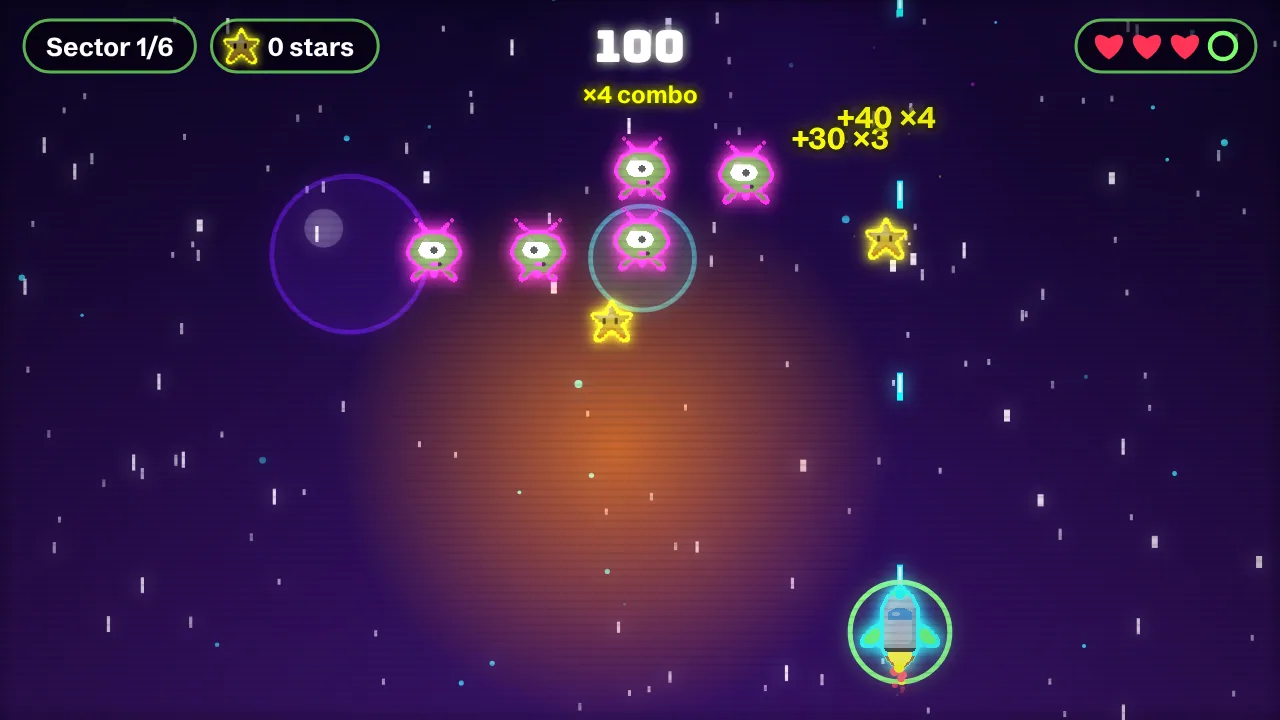
Verdict: true for small, well-defined games – if something sturdy sits underneath. The trick is not what the AI writes, but what it writes into. When a language model has to produce a complete program, results swing from run to run, and one wrong line can break the whole game. When the model fills in a structured description (a hero, three levels, ten quiz questions, a story with two endings) and a tested engine plays it, you get something that works every time. That is how our builder works: Claude designs, the engine runs.
Claim 2: “AI writes better code than I do”
Verdict: sometimes, but code is not the bottleneck. Games feel good or bad in the details: how long you can still jump after leaving a ledge, how fast a character accelerates, how a button press is remembered a few milliseconds early. Those details come from playtesting and tuning, not from a one-shot answer. A prebuilt, tested engine already contains these details; a freshly generated program usually does not. For a quick, personal game you are generally better off with the engine.
Claim 3: “AI quiz questions are always right”
Verdict: false, and this is the one that bites. Language models write fluent, confident text whether or not the fact is correct. In quizzes, the typical slips are years that are off by one, mixed-up names, outdated records and two answer options that are both defensible. The model is excellent at the shape of a good question (clear, four options, a short explanation) and unreliable at being the last word on truth.
- Play every quiz once before you share it.
- Check anything surprising against a second, independent source.
- Ask for easier or differently worded questions if two answers could both be right.
- Replace a faulty question in the studio chat – you see the price of the change first.
Claim 4: “AI characters can talk to players about anything”
Verdict: possible, but rarely the best choice for a small game. A character who improvises replies live can feel magical in a demo. In a shared game it means every minute of play costs money, quality varies, and you cannot test what you cannot predict. We write dialogue in advance instead. Claude composes the conversations, our checks screen them, and every player sees the same polished lines. It is less flashy and much more dependable.
Claim 5: “AI music, voices and trailers are a single click”
Verdict: not yet – and then with some fine print. AI media (music, voices, trailers) are planned as optional extras but cannot be ordered at the moment. The plan is to produce sound with ElevenLabs and video with Seedance, both outside providers; there is no promise about a date. This is how the extras are meant to work:
- KI-Musik & Effekte (planned, 60 credits, from the Starter plan): original music and sound effects.
- Sprachausgabe (planned, 80 credits, from the Creator plan): characters speak their lines in synthetic voices.
- Video-Trailer (planned, 300 credits, from the Creator plan): a short cinematic trailer for your game.
A synthetic voice is not an actor, and a trailer is a taste, not a commercial. We also do not imitate the voices or faces of real people; requests in that direction are blocked by a dedicated filter.
| Claim | Verdict | What to do |
|---|---|---|
| A whole game from one sentence | True for small games with a tested engine | Describe hero, place, goal and tone |
| AI writes better code | Sometimes, but not the bottleneck | Let an engine handle feel and physics |
| Quiz questions are always right | False | Play once and fact-check |
| Characters chat about anything | Possible, rarely worth it | Write dialogue in advance |
| Media in one click | Not yet available | Treat voices and trailers as extras, not magic |
Where AI really shines
Tone, variety and language. A model can give the same game a cozy voice or a spooky one, produce a hundred names for a harbor tavern, explain a quiz answer in a sentence a nine-year-old understands and offer the whole thing in 20 languages. It can also propose numbers for an economy (how fast a bakery produces, what a house costs) that you then test in play. Think of it as a very fast, very well-read design assistant that needs an editor.
Randomness is not the same as AI
When a game builds levels or landscapes from fixed rules and a random seed, no language model is involved. This is called procedural generation. Its big advantage is predictability: the same seed gives the same level, and you can prove that a level is winnable. Our levels and maps are generated this way; the AI decides the framing, such as theme, pace and text.
Labels, rights and common sense
Article 50 of the EU AI Act sets transparency duties for AI-generated content. Every game made with playing.company therefore carries a visible AI label and machine-readable provenance data. Whether copyright arises in purely AI-generated material is judged differently from country to country, and the law is still moving. This guide is not legal advice; if you plan to sell a game, you need a plan with commercial rights and, in doubt, a lawyer.
Five habits for better results
- Be specific. “An astronaut defends a moon base from drones, cheerful and not too hard” beats “a space game”.
- Name your audience. “For six-year-olds” or “for experts” changes wording and pace.
- Keep brands out. Describe what you enjoy about a style of game instead of naming a title; you get an original world.
- Check, then share. One playthrough catches most errors.
- Fix with small steps. In the studio chat a small tweak costs 1 credit, a big one 25.
The step-by-step view of what the AI does in our builder is on the AI game maker page. If you would rather just start, go to make your own game.