Two kinds of AI game makers
Broadly, AI game tools work in one of two ways. Some ask a language model to write the entire game as code. That can be impressive, but results vary from run to run, bugs creep in, and every change means regenerating or debugging code you did not write. Others – like ours – let the AI do the design work and leave the running of the game to an engine that has been built and tested in advance.
In our builder, Claude by Anthropic plays the role of a game designer. It reads your idea and your choices, then writes a structured game description: who the hero is, what the obstacles are called, how fast the game moves, what each level asks of the player, which questions a quiz asks, how a story branches. Our engine reads that description and turns it into a game.
What the AI designs for you
- title, tagline, intro and victory texts
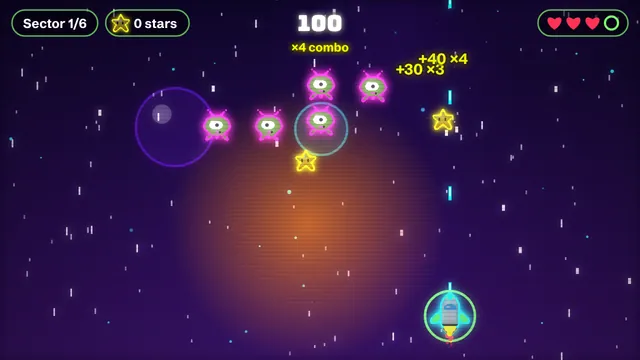
- heroes, enemies and collectibles, matched to our sprite library
- pace, difficulty, enemy density and power-ups
- quiz questions with four options and a short explanation
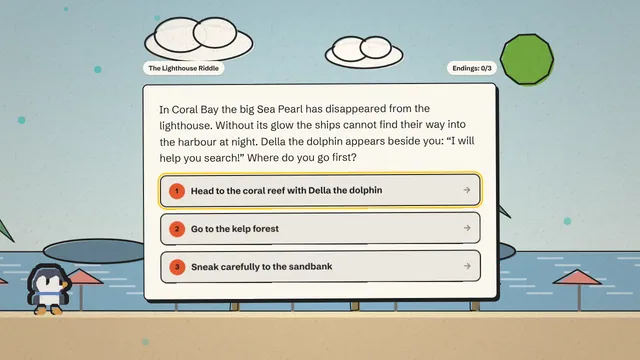
- story scenes with choices and multiple endings
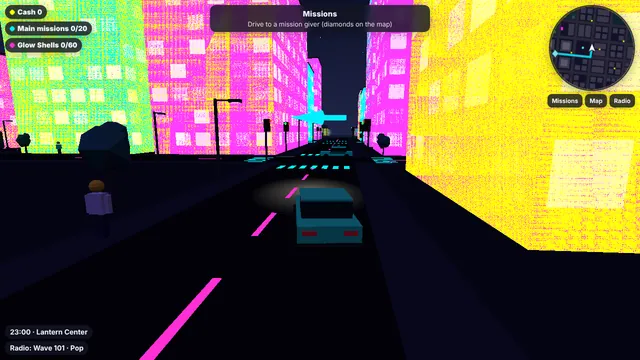
- for world projects: whole economies with production chains, or cities with districts, missions and dialogue
Four checks before you see your game
- Structure: the description is validated against a strict schema – every scene, building and mission must point to something that exists.
- Playability: levels are generated so they can always be beaten; world maps are generated so every production chain works.
- Brands and characters: a filter catches protected names from games, films and TV, both in your prompt and in the AI’s answer.
- Content rules: no violence against people, no weapons in open-world cities, nothing harmful to children.
If a build fails any of these, it is not published and your credits are refunded automatically.
Transparent by design
Article 50 of the EU AI Act requires AI-generated content to be recognizable as such. Every game we build carries a visible AI label and machine-readable provenance data. The free plan runs on Claude Haiku, a fast model; paid plans use larger Claude models for bigger games. API inputs are not used to train models under Anthropic’s commercial terms.
Prompting tips that make a difference
- Hero, place, goal: “A robot searches an underwater lab for its lost gears.”
- Audience: “for kids aged 7 and up” or “for experienced players”.
- Tone: funny, spooky-but-harmless, festive, competitive.
- Language: game text in any of 20 languages.
- Leave out brands: describe what you love about a famous game instead of naming it. You get your own world in the same genre.
There are 9 genres to choose from. For an honest look at what AI can and cannot do in games today, read our guide what AI can do in games. Ready to try? Start with make your own game.